
“My child won't share at playdates”: How to teach kids to share
Life Scenario team · Published · Ages 6–14
How do I teach my child to share toys at a playdate?
To teach kids to share at playdates, try “You can use this while I finish.” Put special belongings away before the guest arrives, and choose toys both children can use. During the visit, help them agree on turns and find an activity they both enjoy.
No sign-up · about 2 minutes

Key takeaways
- Prepare before the guest arrives: choose shared activities and put special private items out of sight.
- Choose an activity both children can take part in.
- Use a clear end to a turn, such as finishing a small section, when waiting is difficult.
- Help the host keep special items private and give the guest something welcoming to do.
- Keep early visits small and adjust the plan if the children are tired, grabbing, or no longer enjoying themselves.
Hosting puts sharing into a different setting
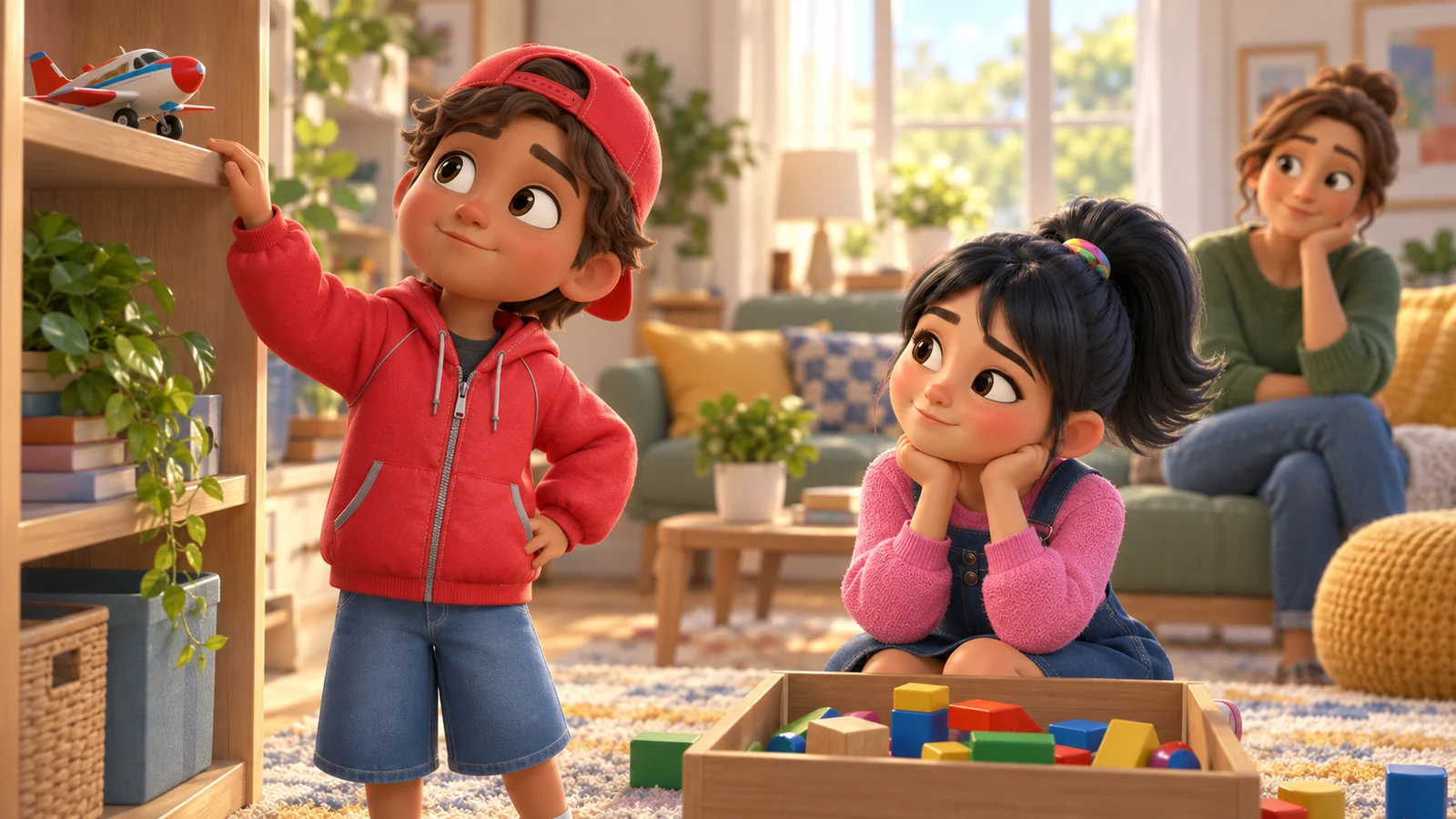
Your child was excited all morning. Ten minutes after the guest arrives, every car, cushion, and marker is suddenly “mine.” You may feel embarrassed in front of the other parent and rush to make your child hand something over. Slow down enough to see the actual problem. Is the guest picking up a treasured object, interrupting a project, or simply trying to join an activity with no clear roles?
Before another visit, walk through the play area with your child. Choose what can be used together and what belongs somewhere private. Once the guest is there, the host needs help following the arrangement they made. If your child changes their mind about a special item, protect it and offer a usable alternative. Do not turn the whole visit into a lesson that only the visiting child pays for.
Sharing includes lending, taking turns, and using materials alongside someone. It does not always require giving up the object currently in a child's hands. Try building separate parts of a town from the same tub of blocks. Start with an activity that makes participation clear before expecting them to solve every ownership disagreement themselves.
4 things your child can say when a friend visits
1.“You can use this while I finish.”
Offer a genuine alternative when the child is finishing a short turn and another suitable toy is available.
2.“That one is special. These are for us.”
Use this for a private item, then show the guest something they are actually welcome to use.
3.“Can we build different parts together?”
Suggest a shared project with separate roles when both children want to take charge of the same materials.
4.“We both want this. Can you help?”
Ask an adult to help arrange a fair turn when the children cannot find a workable solution.
Your child has seen “You can use this while I finish” on the page; now let them try saying it. Life Scenario presents a situation that may include a refusal or misunderstanding, and gives feedback on their answer out loud.
No sign-up · about 2 minutes
What not to say (and what to say instead)
| Instead of | Try | Why |
|---|---|---|
“Don't be selfish. Give it to your friend.” | “Let's find something you can both use.” | Give your child an example of a welcoming invitation. |
“Guests can have anything they want.” | “These toys are available; those are put away.” | Clear limits let the guest participate while respecting personal belongings. |
“You must share every toy equally.” | “Which activity will work for both of you?” | Decide what sharing looks like for this particular game. |
“Next time I'll just invite your friend.” | “This visit needs some adult help.” | Step in calmly to help with this moment. |
What do I say when my child grabs every toy from the guest?
Step close and say, “I won't let you grab. Let's put this down while we choose a plan.” Stop any hitting or throwing and decide what happens next yourself. If a child is upset, separate them briefly with adult support. Avoid asking one child to entertain themselves while you give the other a long lecture in the same room.
Offer two workable options: separate roles in the current activity, or a different activity both children can join. For a turn, choose a visible endpoint that fits the game, such as finishing one short round. Use a timer if it helps both children understand their turns. If the promised turn never arrives because the game keeps expanding, help the first child finish and honor the arrangement.
Before the next visit, rehearse a simple arrival. You pretend to be the guest and ask what is available. Your child shows you the chosen toys and tries a sentence about the private shelf. Then ask for the toy they are currently using. Help them offer a turn or another suitable object. Do not grab unexpectedly as a test; the aim is to practice the words and the plan.
Keep a note of what made the last visit difficult. Perhaps it started immediately after a tiring school day, continued past lunch, or involved a craft with too few materials. Change that specific detail next time. Agree an approximate finish time with the other caregiver. Ask afterward which part was enjoyable and which arrangement needs changing.
What if the sharing plan falls apart?
What if the guest wants the one toy put away?
Keep the agreed limit and help the guest choose another toy. Say that this item is unavailable and show them the shared choices. Avoid retrieving it to prove your child is generous, which makes the preparation agreement unreliable.
What if my child hides everything after the guest arrives?
Stay calm and explain that a guest needs an activity they can join. Help your child choose one of the agreed shared options, or move to a neutral activity with adult support. If neither child can enjoy the visit, arrange a calm ending with the other caregiver.
What if the guest grabs or damages toys?
Step in if the guest keeps taking things or hurting your child. Stop unsafe behavior, check what happened, and help the children repair an ordinary mistake where possible. Speak privately with the caregiver if a repeated pattern makes further visits difficult.
When should I ask for more help?
If conflict around belongings is frequent, intense, or affecting relationships across home and school, compare observations with a teacher or child health professional. Describe the situations and what helps instead of calling your child selfish. Seek prompt support for repeated aggression or fear, while supervising visits safely.
What to say at 6–8, 9–11 and 12–14
| Age | What changes | Line to try |
|---|---|---|
| 6–8 | Keep the shared choices easy to see and the visit simple. An adult may need to explain whose turn is happening and when it ends. Practice one phrase while putting special toys away, then stay available during the visit. | “These are the toys we can use.” |
| 9–11 | Let your child help plan an activity and decide which collections or ongoing projects remain private. Help your child offer the guest a part they might enjoy. When a disagreement occurs, prompt a specific solution before deciding the whole afternoon for them. | “You choose this round; I'll choose the next.” |
| 12–14 | Sharing may involve consoles, craft supplies, sports equipment, or personal space. Help your child state limits in advance and agree rules for shared use. Respect private messages and devices; inviting a friend home does not create permission to access personal accounts or photos. | “We can use this, but my account stays private.” |
Key terms
- Private item
- A possession set aside from shared play; it should be stored before a visit where specific, with a clear adult-supported boundary.
- Taking turns
- Using something at different times with an understandable agreement about when the next person gets access.
- Hosting
- Helping a visitor feel welcome through an activity both people can enjoy.
Give your child 10 free practice scenarios
No card to start. No subscription, ever.
Try one short round together: your child hears a social situation, answers out loud in their own words, and gets feedback. Some situations include a no, a mistake, or an awkward response to handle. Life Scenario has ten free scenarios, no card to start, and no subscription; you can use the feedback for a short conversation afterward.
Start practising freeQuestions parents ask
Should I force my child to share a favorite toy?
You can protect a special toy and choose other materials for the playdate. Put the special item away beforehand when possible. During the visit, make sure the guest has something suitable and genuinely available.
What do I say when my child says every toy is special?
Say, “We need to choose something our guest can use.” Offer a game using shared toys. You can also arrange the next meeting in a suitable neutral setting.
Is refusing to share a sign my child is selfish?
One difficult playdate does not define your child's character. Look at tiredness, unclear expectations, interrupted projects, and the activity itself. Teach the specific hosting skill that was missing.
Should the guest always get the first turn?
That can be one agreed arrangement, but it need not be a rule for every object. Explain the plan before play begins and make sure both children get meaningful participation. Do not change the rule repeatedly in response to whoever protests most.
What if my child shares at school but not at home?
Personal possessions at home may feel different from classroom materials. Ask about the particular objects and plan which ones are available during a visit. You can use the sharing skills they already show while respecting that distinction.
How long should the playdate last?
Choose a length that suits the children's energy, the activity, and adult availability. Begin with a small visit and adjust based on how it goes. A calm ending before everyone is worn out can make another invitation easier.
Sources
- Raising Children Network, Teaching children to share: an age-by-age guide (accessed 2026): Children can practice taking turns and sharing with adult support; protecting special items and planning before playdates can help.
- Child Mind Institute, Kids Who Need a Little Help to Make Friends (accessed 2026): Smaller, manageable play opportunities and parent-supported practice can help children develop social skills.
Published