
Circle of control for kids: what I can control, what I can't, and what to do next
Life Scenario team · Published · Ages 6–14
What is the circle of control, and how do I explain it to my child?
The circle of control is a drawing that sorts a worry into two piles: things I can control (my words, my actions, my effort, who I ask for help) and things I can't (other people's choices, the weather, results). Teach one question, “What can I do next?”, and choose one small step.
Practise a situation like this with your child — no sign-up →
Key takeaways
- Inside the circle: what I say, what I do, how hard I try and who I ask for help. Outside: other people, results, rules and the past.
- The point of the drawing is the next step. Sorting the worry is only the first half.
- Feelings do not go inside the circle. A child cannot choose to stop feeling nervous, though they can choose what to do while nervous.
- “Outside your control” never means “so put up with it”. Bullying and safety are adult jobs.
- Use it on a calm day with a small worry first, such as rain on the day of a trip.
What is the circle of control?
Draw a circle on a piece of paper. Inside go the things a child decides: their own words, their own actions, their effort, who they ask for help. Outside go the things they do not decide: what other people say and do, who wins, what the weather does, what happened yesterday. That is the whole tool.
A well-known adult version comes from “The 7 Habits of Highly Effective People”. FranklinCovey, which teaches the book's ideas, describes a Circle of Concern, the things over which we have little or no control, and a Circle of Influence, the things we can do something about. The version used with children is simpler: one circle and two piles. The examples on this page are our own, and Life Scenario has no connection with FranklinCovey.
One caution before you use it. “Control” is a strong word for a child. A seven-year-old cannot control whether they cry, and telling them they can adds a second problem to the first. Keep feelings out of the circle. What goes inside is what they do next.
10 things in a child's circle of control
What I say. How I treat other people. Whether I try again.
Who I ask for help. Whether I say sorry. How much I practice.
Whether I tell the truth. Who I invite. What I do when I am angry, such as walking away or taking three slow breaths. What I do next.
10 things outside a child's circle of control
What other people say. Whether someone wants to play. Who gets picked.
Who wins. The weather. The teacher's decision.
What happened yesterday. Other people's moods. A friend moving away. How tall I am.
5 things your child can say when a worry is outside their control
1.“I can't control that. What can I do next?”
The core line. It names the part that is out of reach and turns straight to a step, which stops the worry going round the same loop again.
2.“I can ask. They get to answer.”
For invitations and requests. It separates the brave part, which belongs to your child, from the reply, which belongs to the other person and may be no.
3.“I did my part.”
For results: a test, a tryout, a game. It lets a child put down the outcome once the effort is finished, and it is true whether they won or lost.
4.“That's a grown-up job. Can you help?”
For anything involving safety, bullying or adult decisions. It tells a child that handing a problem to an adult is a proper move and never a failure.
5.“I don't know yet. I'll find out on Friday.”
For waiting. Putting a day on the answer gives the worry an end point, so your child is not checking with you every hour.
Sorting a worry on paper is the calm version. The harder version comes when something feels unfair and other people are standing there. In Life Scenario your child hears a moment like this one: your cousin is chosen as team captain even though you have played longer. They answer in their own words, get gentle feedback and can try again.
No sign-up · about 2 minutes
How to draw a circle of control in five minutes
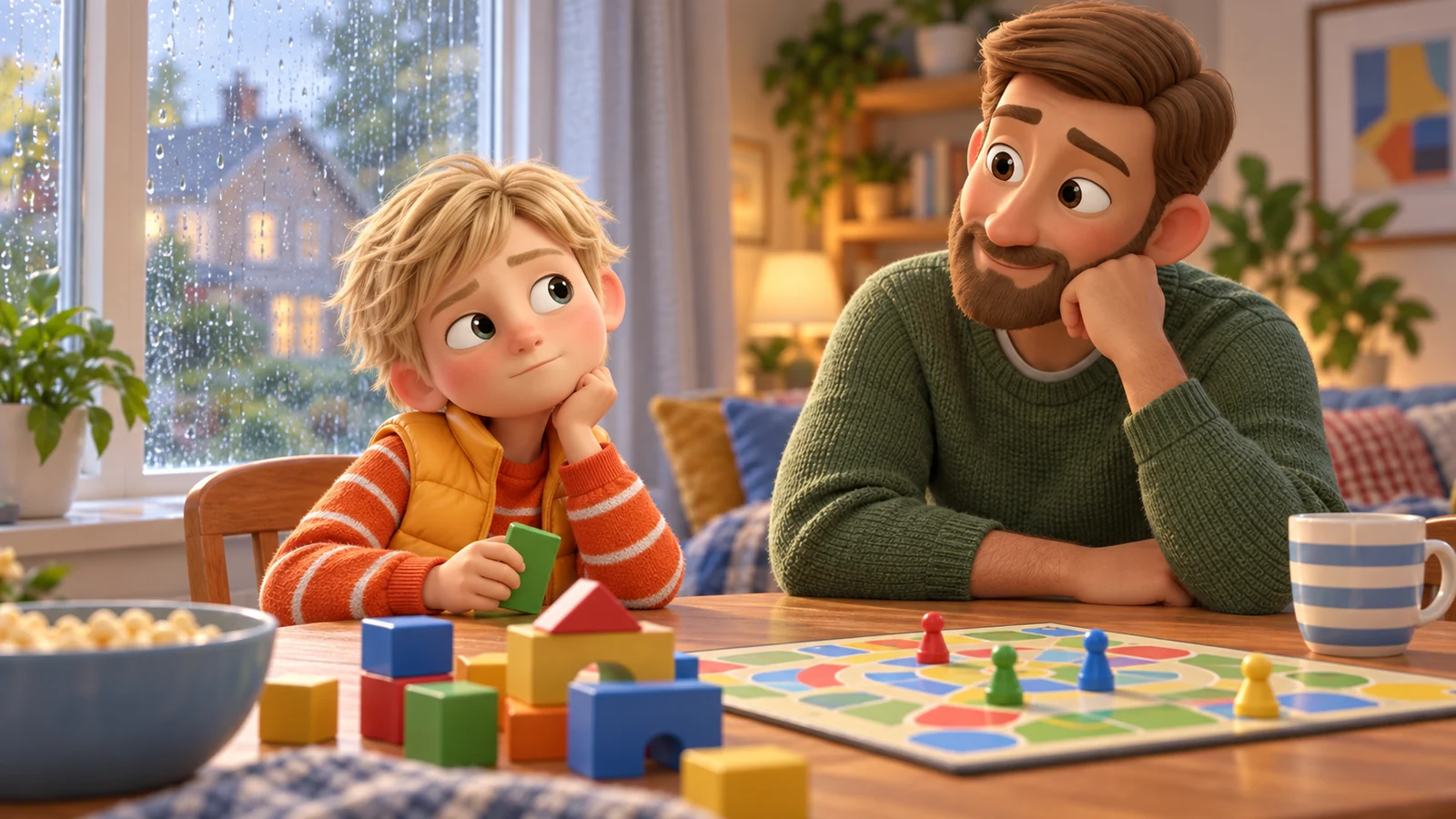
Pick a small, real disappointment. Rain on the day of the park trip is ideal. Let your child say what they wanted and how annoying it is before you pick up a pen.
Draw a circle. Ask, “Can we change the rain?” Write “rain” outside. Ask, “What can we decide?” Write the answers inside: a different day for the park, a board game now, building something, phoning a friend to come over. Offer choices that really exist.
Choose one thing from inside the circle and do it. Stop there. Next time a bigger worry comes up, such as an invitation or a tryout, your child already knows how the drawing works.
For older children, add a ring between the two: things I can influence. I cannot decide whether she comes to my party, though I can invite her kindly and early. That middle ring is where most friendship worries sit.
What not to say (and what to say instead)
| Instead of | Try | Why |
|---|---|---|
| “You can control your feelings.” | “The feeling is here. What would help right now?” | A child cannot switch a feeling off, and hearing that they should makes them feel worse. They can choose an action. |
| “It's out of your control, so forget it.” | “You can't decide it. You still care. What can you do?” | Being told to forget something that matters ends the conversation. Naming a step keeps it going. |
| “Don't worry, she'll definitely say yes.” | “She might say no. What will you do if she does?” | You cannot promise another child's answer. A plan for the no makes the asking less frightening. |
| “If you ignore them, they'll stop.” | “What they do is not your job to fix. I'll speak to the teacher.” | Other children's unkindness is outside your child's circle. Stopping it belongs to adults. |
| “Everything inside the circle is up to you.” | “Which part can you do, and which part shall I do?” | A step inside the circle may still need help. Saying what you will do keeps the whole problem from landing on the child. |
What do I say when my child worries about things they can't change?
Listen first, all the way to the end. The NHS advice for parents of anxious children starts in the same place: hear the worry out and do not dismiss it. Then move to finding solutions together.
Resist the promise. The Child Mind Institute points out that you cannot promise a child that a fear will not come true, that they will not fail the test or be laughed at. What you can do is say you are confident they will manage, and think it through with them: “If that did happen, what would you do?” For some children, having a plan takes part of the uncertainty away. The same thinking is behind our guide on reassurance before a game.
Then sort the worry. Take being not invited to a party. Outside the circle: who the other child invited. Inside: saying “I felt left out” to you, inviting someone over that weekend, deciding how to act on Monday. The disappointment is still real, and now there is something to do with the afternoon.
Some children use the circle against themselves: “I can't control anything, so why try?” That is closer to the pattern in a child who gives up easily, and it needs a smaller step, never a bigger speech. A habit that pairs well with the circle is noticing small good moments in the day, which some families call glimmers.
One limit matters more than the rest. If the thing outside the circle is another child hurting yours, the drawing is not the answer. See what to do if your child is being bullied.
What if the worry is too big for a circle?
What if my child worries about parents arguing or money?
Say clearly that these are adult problems and adults are dealing with them. Give a short, true account of what they need to know. A child's part is small: telling you when they are worried. They should never be asked to keep a parent calm or take a side.
What if the worry is about being bullied?
Another child's behavior is outside your child's circle, and stopping it is the school's and your job. Your child's part is to move away and tell a trusted adult. Do not let the exercise suggest that they could end it by reacting better.
What if my child keeps asking the same question?
Answer honestly once, including “I don't know yet”, and say when you will know. Then point to the plan instead of answering again. Answering the same question over and over rarely settles it.
When should I get more help?
If worry is stopping your child sleeping, eating, going to school or seeing friends, or has gone on for weeks, speak to your GP or pediatrician, or the school counselor. The NHS advises seeking help when anxiety is getting in the way of a child's everyday life.
What to say at 6–8, 9–11 and 12–14
| Age | What changes | Line to try |
|---|---|---|
| 6–8 | Use real paper and two piles of objects or sticky notes. Keep to concrete things: rain, a broken toy, a friend who is off sick. You do most of the sorting and name your own part aloud. | “Can you help me pick what to do?” |
| 9–11 | Friendship and school worries fit well: who gets picked, what a friend said, a test result. Let them do the sorting and argue about where things go. That argument is the thinking. | “I can ask. They get to answer.” |
| 12–14 | Add the middle ring of influence and skip the drawing if they find it childish. A question in the car does the same job: “Which bit of this is yours?” | “I did my part. The rest isn't mine.” |
Key terms
- Circle of control
- A drawing that separates what a person can decide (their own words and actions) from what they cannot (other people, results, events).
- Circle of influence
- Things you can affect without deciding them, such as asking, inviting or practicing. The other person or the result still has the final say.
- Next step
- One small action from inside the circle that a child can take today.
- Adult job
- A part of the problem that belongs to grown-ups: safety, bullying, money, family decisions.
Give your child 5 free practice scenarios
No card to start. No subscription, ever.
Try one short round together. Your child hears a situation such as a cousin being chosen as team captain ahead of them, says what they would do, and gets gentle feedback with a chance to try again. You get a few prompts for a short conversation afterward.
Start practising freeQuestions parents ask
What is the circle of control for kids?
It is a simple drawing: a circle with the things a child can decide inside it (what they say, what they do, how hard they try, who they ask for help) and the things they cannot decide outside it (other people, results, the weather). It is used to turn a worry into one next step.
What are examples of things kids can and can't control?
In their control: their words, their effort, saying sorry, asking for help, who they invite. Outside it: whether someone says yes, who gets picked, who wins, the teacher's decision, a friend moving away. This page lists ten of each.
How do I explain the circle of control to a 6-year-old?
Use something that has just happened. “Can we stop the rain? No. So rain goes out here. What can we choose? A game or baking. Those go in here.” Draw it, pick one, and do it. Leave the word “control” out if it confuses them.
What do I say when my child says nothing is in their control?
Agree with the true part: “A lot of this isn't up to you.” Then offer two very small choices, such as who to tell or what to do in the next ten minutes. If nothing feels possible, they may need you to act first.
Can children control their feelings?
Not directly. A child cannot decide to stop feeling scared or jealous. They can learn to choose what they do while the feeling is there, such as walking away, breathing slowly or asking for help. Keep feelings out of the circle and put those actions in.
What is the difference between the circle of control and the circle of influence?
Control covers what you decide yourself. Influence covers what you can affect and someone else decides: you can invite a friend, and the friend chooses whether to come. Older children find the middle ring useful for friendship worries.
Do I need a circle of control worksheet?
No. A circle drawn on scrap paper works as well as a printed sheet, and children engage more when they write their own examples. Keep the paper so you can add to it the next time the same worry comes back.
What do I say when my child keeps worrying after we've done the circle?
Go back to the plan instead of starting again: “We said you'd ask her on Monday. Is there anything new?” Worry returning is normal. If it is getting in the way of sleep, school or friends, ask your doctor or the school counselor for advice.
Sources
- FranklinCovey — Habit 1: Be Proactive (The 7 Habits of Highly Effective People) (2020): Proactive people focus their efforts on their Circle of Influence, the things they can do something about; reactive people get stuck on their Circle of Concern, things over which they have little or no control.
- Child Mind Institute — What to Do (and Not Do) When Children Are Anxious (accessed 2026): Parents cannot promise a child that their fears are unrealistic, but can express confidence that the child will manage, and can think things through with the child, including what they would do if the fear came true.
- NHS — Anxiety in children (accessed 2026): Parents should talk with the child about their worries, listen without dismissing them, help them find solutions, and seek help from a GP or school nurse if anxiety is affecting everyday life.
Published