
“My child sits alone at lunch”: helping them find comfortable company
By the Life Scenario team · Published · For parents of children 6–14
What should I do if my child sits alone at lunch?
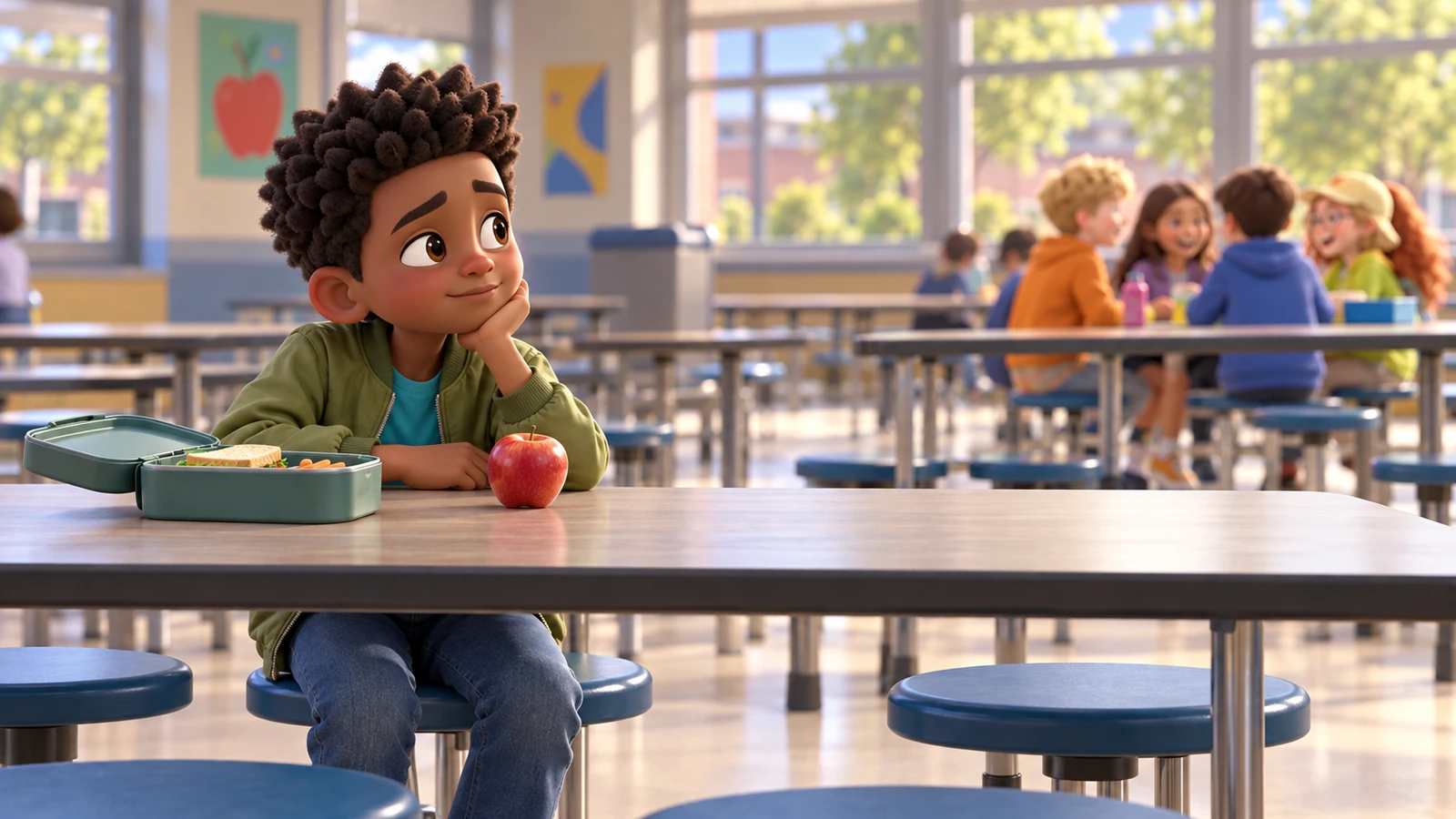
If your child sits alone at lunch, practice “Is this seat free?” for a safe table and “Can you help me find a seat?” for staff. First ask whether they enjoy being alone or wish for company. Ask school to address repeated exclusion and protect mealtime.
Key takeaways
- Check how your child feels before assuming that every meal alone is lonely.
- Ask about the specific routine: arrival times, seating rules, noise, and whether friends have the same lunch period.
- Practice an invitation before entering the room, so the child is not making every decision while carrying a tray.
- Request discreet staff support if seating is repeatedly difficult or children move away to exclude your child.
- Make sure the plan allows your child to eat comfortably; finding a friend should not be a condition for having lunch.
A seat alone does not tell you the whole story
You might discover the arrangement by accident: a passing comment, a teacher's message, or a visit to school. Before acting, ask your child how lunch feels. They may enjoy a quiet meal after a noisy morning. They may also be pretending to prefer it because admitting loneliness is painful. Ask how lunch feels and leave room for their answer.
Ask about the routine as well as the relationships. A friend may eat in another group or arrive earlier. A full table, an unclear seating rule, or a crowded lunch line can make joining awkward. Check when your child reaches the lunchroom and where they are allowed to sit.
Repeatedly being avoided is a different concern. If children get up whenever your child sits down, save places only to exclude them, or use lunch to humiliate them, tell school about those actions. A seating script can help with an ordinary opening. It cannot replace adults addressing a pattern of targeting.
4 things your child can say when they want lunch company
1.“Is this seat free?”
Use this at a table that feels safe and has an available place. The question checks the specific arrangement. If the answer is no, your child can try another seat.
2.“Want to sit together at lunch?”
Use this with a friendly classmate before the meal, perhaps after a shared lesson. Planning ahead can reduce the uncertainty of entering the room and searching while everyone else is already seated.
3.“Can you help me find somewhere to sit?”
Use this with the supervising adult when the child is stuck. Ask an adult to help your child find a comfortable place to eat quietly.
4.“I like quiet, but I don't want to be alone.”
Use this at home or with school staff when the choice is more complicated than company or solitude. It helps adults consider a quieter arrangement with another child instead of assuming the loudest table is the goal.
What not to say (and what to say instead)
“I'm coming in to make them include you.”
“Let's ask what help you would feel comfortable with.”
Agree on a discreet way for staff to help.
“Just sit down. They can't stop you.”
“Let's find a table and an adult who can help.”
Arrange a place where your child can eat comfortably.
“You must be lonely eating alone.”
“How does lunchtime feel to you?”
The question leaves room for a preference for quiet as well as a wish for company.
“I'll pick you up for lunch every day.”
“Let's look at what would make lunch small.”
A regular removal may not fit the child's needs or solve the school problem; consider the actual circumstances together.
| Instead of | Try | Why |
|---|---|---|
| “I'm coming in to make them include you.” | “Let's ask what help you would feel comfortable with.” | Agree on a discreet way for staff to help. |
| “Just sit down. They can't stop you.” | “Let's find a table and an adult who can help.” | Arrange a place where your child can eat comfortably. |
| “You must be lonely eating alone.” | “How does lunchtime feel to you?” | The question leaves room for a preference for quiet as well as a wish for company. |
| “I'll pick you up for lunch every day.” | “Let's look at what would make lunch small.” | A regular removal may not fit the child's needs or solve the school problem; consider the actual circumstances together. |
What do I say when my child dreads walking into the lunchroom?
Try, “Which part is hardest: finding a place, starting a conversation, or being around that group?” The answer tells you what to rehearse and what to ask school. In a UK school, your child may call the room the hall and the period lunchtime. Use the words they use so the plan is easy to picture.
Set up a table at home and let your child carry a plate or empty tray. Practice approaching a safe place and asking whether the seat is free. Then practice hearing that it is taken and going to the adult instead of standing in the middle of the room. Keep the scene ordinary; do not imitate classmates getting up and laughing.
If your child knows someone they would like to sit with, rehearse asking before lunch. The other child may say yes, have another plan, or be unsure. Your child can accept the answer and ask someone else. Adults may need to help with seating arrangements, especially for younger children or different class schedules.
Ask school staff which arrangements are possible. A quiet supervised option, a short check-in, or a facilitated small lunch group may be available. Agree who will check whether the arrangement is comfortable and how your child can ask for a change. The plan should continue beyond the first day someone helps them find a seat.
What do I say when a lunch plan does not work?
What if other kids move away as soon as mine sits down?
Report the repeated exclusion to school. Ask staff to observe and intervene. Your child can go to the agreed adult if they are being bullied.
What if my child says they prefer eating alone?
Respect the answer while keeping an open conversation about whether lunch is comfortable and whether they have company elsewhere when they want it. Do not require group seating as proof that they are doing well. Ask again gently if their behavior or mood changes.
What if they are not eating?
Ask what is getting in the way and tell school promptly so meals can be supported. Avoid treating food as a reward for joining a table. Seek advice from the child's usual health professional if the problem persists or you are concerned about their health.
What if the new arrangement feels embarrassing?
Ask which part draws unwanted attention and work with staff to change it. A quiet check-in may feel different from being publicly assigned a buddy. Keep the child involved while adults remain responsible for a safe, workable mealtime.
What to say at 6–8, 9–11 and 12–14
- 6–8
- Ask staff to help with the whole routine, including the line, carrying food, and finding a seat. A younger child may need an introduction or a predictable place. Practice one short request and make sure the child knows which adult is available during the meal.
- “Can you help me find a seat?”
- 9–11
- Let your child choose a classmate for a small invitation if there is someone they enjoy. Check whether seating and schedules allow the plan. Ask about noise or crowding as well as friendship, and agree a discreet backup if the chosen seat is unavailable.
- “Want to sit together after this class?”
- 12–14
- Respect the child's wish to avoid a public rescue. They may want help identifying a quieter table or an activity with a lunch option. Ask how your child feels about eating alone and check that they have time and space to eat.
- “Could we plan a quieter place for lunch?”
| Age | What changes | Line to try |
|---|---|---|
| 6–8 | Ask staff to help with the whole routine, including the line, carrying food, and finding a seat. A younger child may need an introduction or a predictable place. Practice one short request and make sure the child knows which adult is available during the meal. | “Can you help me find a seat?” |
| 9–11 | Let your child choose a classmate for a small invitation if there is someone they enjoy. Check whether seating and schedules allow the plan. Ask about noise or crowding as well as friendship, and agree a discreet backup if the chosen seat is unavailable. | “Want to sit together after this class?” |
| 12–14 | Respect the child's wish to avoid a public rescue. They may want help identifying a quieter table or an activity with a lunch option. Ask how your child feels about eating alone and check that they have time and space to eat. | “Could we plan a quieter place for lunch?” |
Key terms
- Chosen solitude
- Time alone that a person wants and finds comfortable.
- Unwanted isolation
- Wanting company and feeling there is nobody to turn to.
- Seating plan
- An arrangement for where children eat and how adults help when a seat is difficult to find.
- Discreet support
- Help given quietly and privately.
Questions parents ask
Should I worry if my child sits alone at lunch?
Ask how they feel about it and whether they have company when they want it. Comfortable quiet time is different from unwanted exclusion. Look at the child's experience and the specific school routine.
What do I say if I only found out by accident?
Keep the first conversation calm: “I heard lunch has been different lately. How is it for you?” Avoid making them responsible for your shock or sadness. Let them explain before proposing a solution.
Should I come to school and eat with my child?
Discuss any visit with your child and school, considering whether it would help or draw unwanted attention. An occasional agreed visit is different from replacing the school lunch routine indefinitely. Address the underlying difficulty too.
What do I say when they say every seat is taken?
Ask how seating works and whether an adult helps. There may be a specific rule or a pattern of exclusion to investigate. Practice asking staff where to sit.
Should a teacher assign a lunch buddy?
A supported arrangement may help if the children are comfortable and staff follow up. Ask how it will be introduced and reviewed. A label alone will not ensure that your child has a pleasant meal.
How can I help with conversation once they have a seat?
Start with one small detail from the shared day or activity. Your child can ask a question, listen, and add a detail. They do not need to entertain the table throughout lunch.
Related
Sources
- Child Mind Institute — How to Help Kids Who Are Lonely (2026): Being alone and feeling lonely are not the same; adults should ask about the child's experience.
- Child Mind Institute — Kids Who Need a Little Help to Make Friends (2026): Teachers can offer information about peer relationships and help identify comfortable opportunities for contact.