
My child is shy about joining a new team: the first practice
By the Life Scenario team · Published · For parents of children 6–14
How can I help my shy child join a new sports team?
Practice “I'm new. Where should I start?” and “Can you show me the drill?” before the first practice. Ask the coach about the arrival routine and a small first activity. Agree on nearby support, then check whether the team includes your child instead of expecting them to manage everything.
Key takeaways
- Find out whether your child wants the sport and what feels unfamiliar about the first practice.
- Ask the coach about arrival, equipment, partner selection, and support before the session.
- Practice one useful question instead of a confident introduction to the whole team.
- A welcoming coach and fair participation matter as much as the child's preparation.
- Review the experience before deciding whether the child needs more time, more support, or another setting.
The first task may be finding where to stand
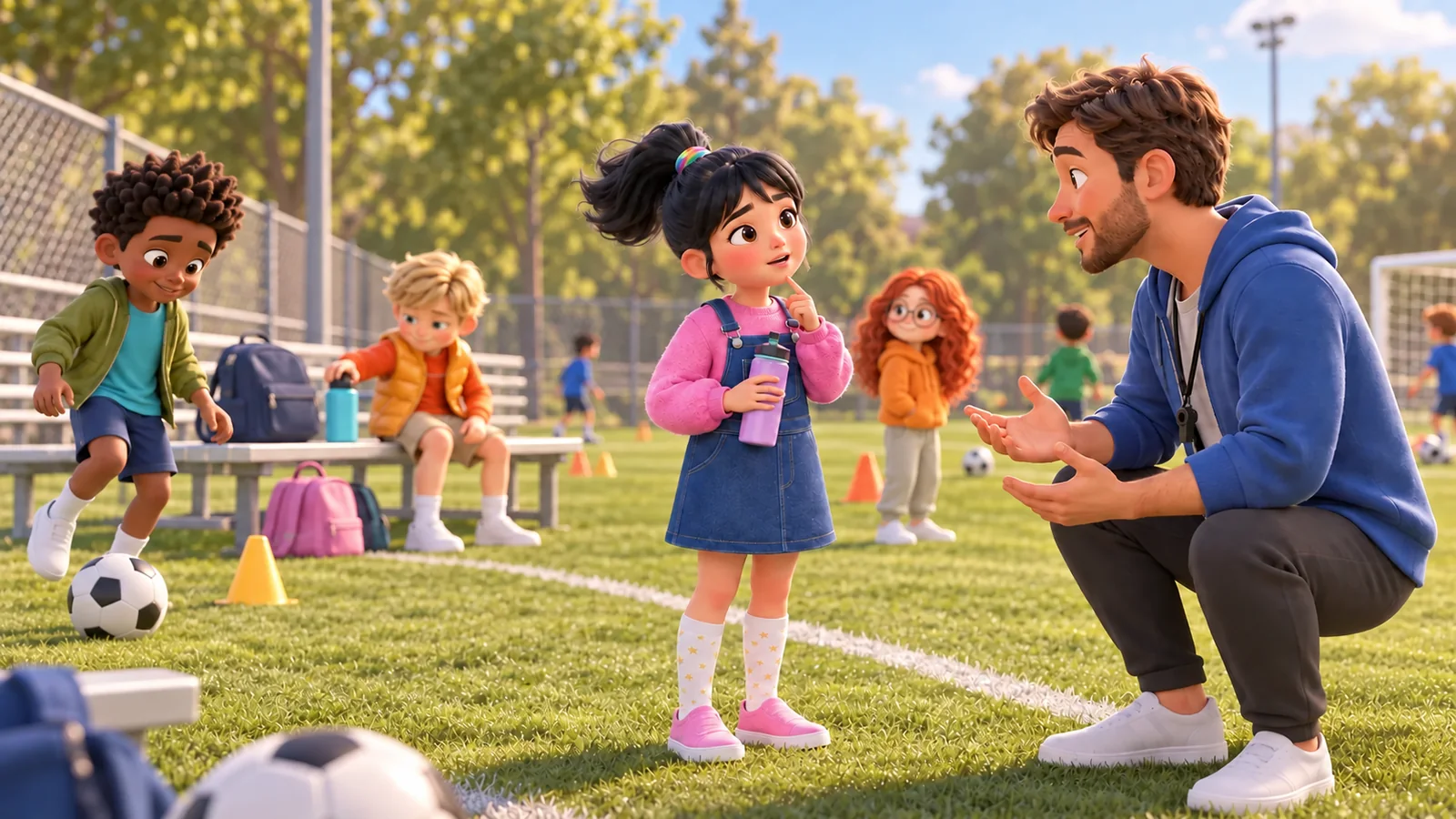
Your child was excited about joining until you reached the field. Now the other players seem to know each other, the coach is setting up equipment, and your child stays beside you. They may want to play and still not know how to enter the group. Start with the specific uncertainty: who should they approach, where do they put their bag, and what happens first?
Ask what your child wants from the activity. They may be interested in the sport but worried about joining an established group, unsure about the rules, or uncomfortable with the setting. If the activity was mainly your idea, acknowledge that too. A first practice should not become a test of whether they can prove they are brave enough to deserve the opportunity.
Child Mind Institute recommends small preparation and practice for children who need help entering social situations. For a team, adult preparation is part of that work. A coach can explain the opening routine, introduce a partner, and make sure a new player is not left to stand on the edge while everybody else organizes themselves.
4 phrases for the first practice
1.“I'm new. Where should I start?”
Use this when approaching the coach or another designated adult at arrival. Practice finding that person at the start of the session.
2.“Can you show me the drill?”
Choose this when a verbal instruction is not enough. Ask the coach to show the task again.
3.“Could we warm up together?”
Try this with a welcoming teammate when the setting feels safe and a shared warm-up is allowed. The coach can help arrange a partner if the child needs support.
4.“I need help finding a partner.”
Practice this for activities where players pair up quickly. Ask the adult to help the new child join in.
What not to say (and what to say instead)
“Stop hiding behind me.”
“Let's find the coach and check the first step.”
Explain what your child can do first and where you will be.
“The other kids don't need a parent here.”
“We agreed I'll stay here while you begin.”
Keep to the support plan you agreed, then review it privately afterward.
“Just be confident and they'll like you.”
“You can ask one question and see how it goes.”
The child cannot control the team's approval; help them participate in a small, useful way and check whether the adults and peers provide a reasonable welcome.
“You have to finish, no matter what.”
“We'll check how it's going with the coach.”
Agree when to check how the activity is going, and act sooner on illness, serious distress, or harm.
| Instead of | Try | Why |
|---|---|---|
| “Stop hiding behind me.” | “Let's find the coach and check the first step.” | Explain what your child can do first and where you will be. |
| “The other kids don't need a parent here.” | “We agreed I'll stay here while you begin.” | Keep to the support plan you agreed, then review it privately afterward. |
| “Just be confident and they'll like you.” | “You can ask one question and see how it goes.” | The child cannot control the team's approval; help them participate in a small, useful way and check whether the adults and peers provide a reasonable welcome. |
| “You have to finish, no matter what.” | “We'll check how it's going with the coach.” | Agree when to check how the activity is going, and act sooner on illness, serious distress, or harm. |
What do I say before my child's first team practice?
Contact the coach with a brief, specific request. Explain that your child is new and may need help with arrival or finding a partner. Ask where to meet, what equipment is needed, and whether there is a usual way to introduce a new player. Share relevant access or health needs privately. Avoid describing the child to the whole team as shy or anxious before they arrive.
At home, rehearse the first exchange once. You can be the coach, your child can ask where to begin, and you can give one clear instruction. Include a question if the instruction is unclear. A demonstration with a household object is enough; you do not need to imitate a demanding coach or recreate the noise of a full practice.
Agree with your child and the coach what support is possible. You might remain in the usual parent area while the child joins a warm-up, or an adult might introduce them to one teammate. Explain any rules about parents staying at the venue. Confirm arrangements for partners, breaks, or early departures with the coach.
After practice, ask about one moment. Did they understand the first drill? Did someone include them? Was there a point when they needed help but did not know whom to ask? Use that information for the next session. If they want to continue, keep a useful support in place long enough to learn whether it works.
What if the first practice is difficult?
What if my child will not leave my side?
Pause and ask the coach about a smaller starting point or another introduction. Check whether the child is confused, uncomfortable, unwell, or unwilling to try the activity. Avoid pulling them into the group or making the moment a public argument.
What if teammates never pass to the new player?
Ask the coach what they notice and how practice gives new players a fair chance to participate. The child can request a partner, but inclusion is also an adult responsibility. Repeated exclusion should not be explained away as a confidence problem.
What if the coach mocks questions or mistakes?
Take the child's report seriously and raise the specific conduct with the coach or club's responsible person. Consider whether the environment is suitable and safe. Ask the coach to stop humiliating treatment.
What if the worry continues across several sessions?
Ask your child and the coach which parts are becoming easier and which still need help. Check the activity fit and support needs. If distress affects other settings or activities your child wants, seek advice from school staff or a health professional.
What to say at 6–8, 9–11 and 12–14
- 6–8
- Use a clear arrival routine, a familiar adult nearby where allowed, and one short request. The coach should actively help the child find a place in the activity. Explain what will happen after practice as well as at the start.
- “Where do I put my bag?”
- 9–11
- Prepare for partner selection and unfamiliar team routines. Ask the coach about a welcoming teammate or a clear role in the opening activity. Let the child choose the question they most want to practice.
- “Can you show me where to stand?”
- 12–14
- Discuss entering an established peer group and what support would feel discreet. A teenager may prefer a private message to the coach or a brief introduction before others arrive. Respect their preferences while still addressing exclusion or unsafe conduct.
- “Who should I join for this drill?”
| Age | What changes | Line to try |
|---|---|---|
| 6–8 | Use a clear arrival routine, a familiar adult nearby where allowed, and one short request. The coach should actively help the child find a place in the activity. Explain what will happen after practice as well as at the start. | “Where do I put my bag?” |
| 9–11 | Prepare for partner selection and unfamiliar team routines. Ask the coach about a welcoming teammate or a clear role in the opening activity. Let the child choose the question they most want to practice. | “Can you show me where to stand?” |
| 12–14 | Discuss entering an established peer group and what support would feel discreet. A teenager may prefer a private message to the coach or a brief introduction before others arrive. Respect their preferences while still addressing exclusion or unsafe conduct. | “Who should I join for this drill?” |
Key terms
- Arrival routine
- The sequence at the start of practice, including where to meet, put equipment, and begin. Knowing it can remove specific uncertainty.
- Drill
- A structured practice activity used to learn or rehearse a sports skill.
- Participation support
- An arrangement that helps a child access the activity, such as a demonstration, a clear partner plan, or a suitable adjustment.
Questions parents ask
How do I help a shy child join a sports team?
Check that they want the activity and ask what feels unfamiliar. Arrange a clear arrival routine with the coach and practice one useful question. Watch whether the setting includes and supports them.
What do I say before my child's first team practice?
Explain where they will go, whom they will meet, and the help that will be available. Rehearse the opening request briefly. Avoid a long speech about confidence just before entering the venue.
Should I stay for practice?
Follow the club's arrangements and agree on support with your child and the coach. If staying is possible and useful, decide where you will be. Do not disappear unexpectedly to force independence.
What if my child is less skilled than the team?
Ask the coach whether the level is suitable and what instruction or grouping is available. Ask how beginners are taught the skills. A different level may give your child more time to learn.
How many practices should we try before stopping?
There is no universal number that fits every child and setting. Review the child's interest, the support offered, and what happens at sessions. Act promptly on serious distress or harm.
What if they enjoy the sport but not the team?
Separate the activity from the particular environment. Discuss coaching, peer inclusion, group size, and specific alternatives where available. Look for another class or team if this setting is unsuitable.
Related
Sources
- Child Mind Institute — Kids Who Need a Little Help to Make Friends (2026): Children may benefit from manageable social preparation, rehearsal, and adult help creating opportunities to participate.
- Child Mind Institute — My 10-year-old daughter with anxiety won't participate in gym. Should we push her? (2023): Difficulties in physical group activities can call for checking the child's needs and considering manageable steps with responsible staff.