
Kids teasing my child about their looks: what to say
By the Life Scenario team · Published · For parents of children 6–14
What do I say when kids tease my child about their looks?
For appearance teasing, your child can try “I like my hair,” then return to what they were doing. Ask which comment hurt and reassure them that they deserve kindness. Let them choose their own style, and ask adults to stop repeated comments about their looks.
Key takeaways
- Ask which comment hurt and what worried your child about it.
- Avoid promising that changing a haircut, clothing, or another feature will stop somebody else's behavior.
- Let your child have ordinary preferences about their appearance while helping them notice pressure and fear.
- Tell school about repeated comments and name any racial, cultural, disability-related, or other identity-based targeting clearly.
- Keep home free from appearance jokes that repeat the same message, even when relatives intend them affectionately.
The first response should not turn into a makeover plan
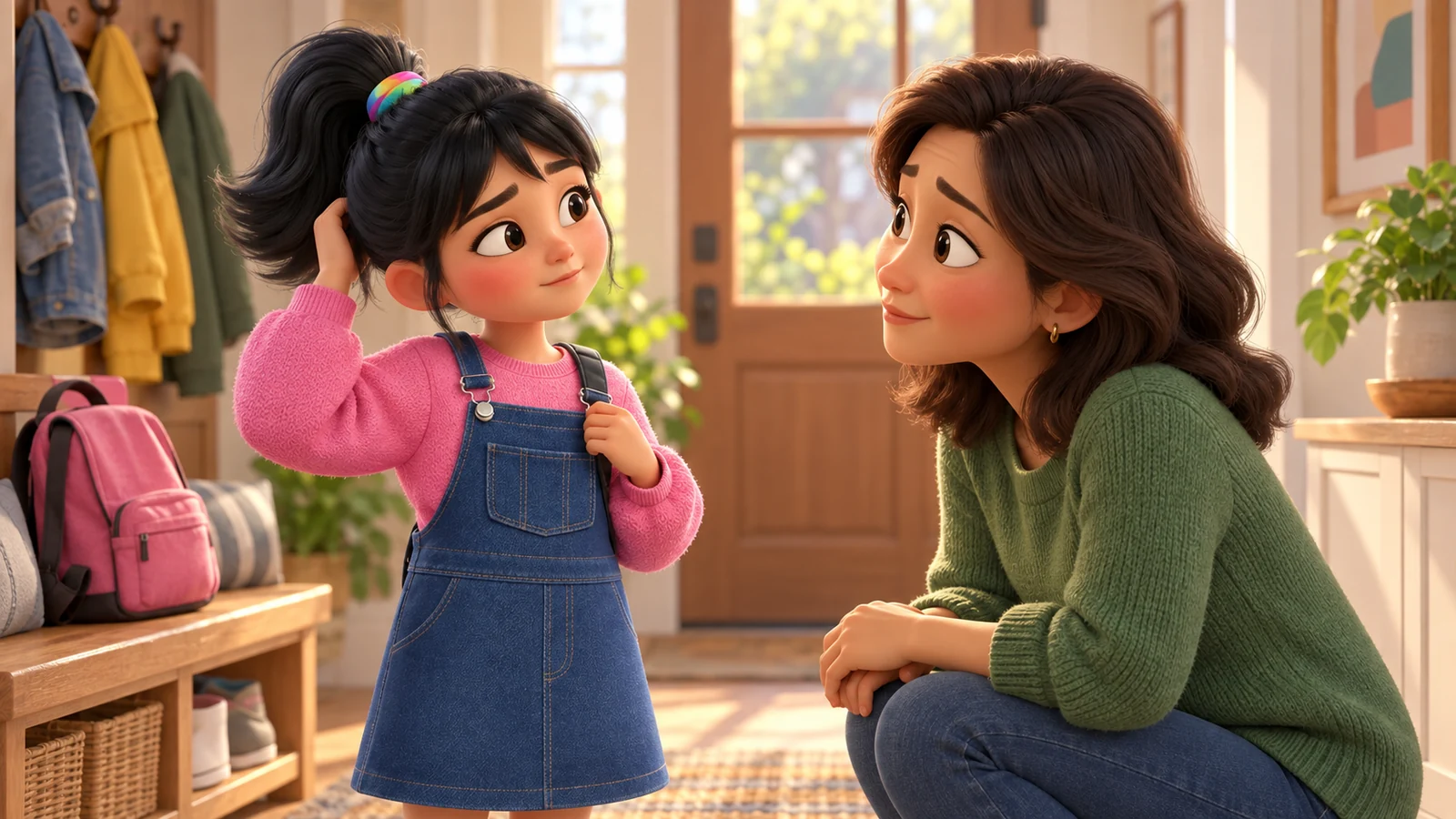
Your child comes home covering a new haircut, taking off their glasses, or asking to change clothes they liked yesterday. Start by asking what happened. A reply might be “I like my hair” or “I need my glasses to see.” They may need you to hear the embarrassment before they want to choose any words.
Do not ask them to defend why a comment hurt. A remark about hair might connect to family identity, a personal preference, or simply the shock of being singled out. “What did you wish the adult had done?” can reveal what support was missing. Your child can tell you what was said.
Changing appearance and stopping mistreatment are separate questions. A child can choose a haircut because they want it, including after an unpleasant experience. They should also know that adults will address targeting whether they make that change or not. Avoid treating the decision as a test of confidence in either direction.
4 things your child can say after comments about their looks
1.“I like my hair.”
Use this once if your child wants a calm answer about their own appearance. They can return to their activity afterward. Repeated comments need adult help.
2.“Can I explain this somewhere private?”
Use this if the child needs to describe an appearance-based or identity-based comment away from an audience. An adult can provide a quieter setting and keep the information with people who need it to help.
3.“I liked it before they said that.”
Use this at home when a child is trying to understand why a style choice suddenly feels wrong. Listen if your child wants to change the style.
4.“Please don't comment on my appearance.”
Use this with safe family members or familiar adults who keep making unwanted remarks. A parent should support the request, and the child does not have to turn it into a debate about whether the remark was a compliment.
What not to say (and what to say instead)
“We'll change it so they stop.”
“I'll help with the teasing whatever you choose.”
This keeps adult protection separate from whether the child changes the feature being targeted.
“But you're beautiful, so who cares?”
“That comment hurt. What happened afterward?”
A compliment may be welcome later, but first your child needs their experience heard.
“You must keep it to show you're confident.”
“What would you choose if nobody had commented?”
Ask what they liked about the style before the comments started.
“They can't help noticing something unusual.”
“They can choose to treat you respectfully.”
Noticing a difference does not excuse repeated jokes, humiliation, or unwanted attention.
| Instead of | Try | Why |
|---|---|---|
| “We'll change it so they stop.” | “I'll help with the teasing whatever you choose.” | This keeps adult protection separate from whether the child changes the feature being targeted. |
| “But you're beautiful, so who cares?” | “That comment hurt. What happened afterward?” | A compliment may be welcome later, but first your child needs their experience heard. |
| “You must keep it to show you're confident.” | “What would you choose if nobody had commented?” | Ask what they liked about the style before the comments started. |
| “They can't help noticing something unusual.” | “They can choose to treat you respectfully.” | Noticing a difference does not excuse repeated jokes, humiliation, or unwanted attention. |
What do I say when my child asks to change how they look?
Try, “We can think about the change, and I'll also help with how they treated you.” Ask what they liked before the comment and what they want now. Give them time if the decision is not urgent. Let your child change their mind.
Discuss what is possible, including cost and school rules. A haircut, an item of clothing, and a change involving health or the body are different decisions. Ask your child's doctor about any health concerns. Avoid presenting an appearance change as a treatment for bullying or making your child responsible for preventing future remarks.
For rehearsal, pretend to be a school adult in a quiet place. Your child practices asking to explain privately, then gives as much detail as they can. You can respond, “Thank you for telling me. Let's work out what needs to happen next.” Do not recreate the insult, ask them to stare at the feature in a mirror, or practice laughing at themselves.
Contact school about the behavior and the setting. Tell school staff plainly if comments targeted race, culture, disability, or another part of your child's identity. Ask how staff will respond and check in. At home, ask relatives to stop related jokes and avoid discussing your child's appearance as a problem to solve in front of them.
When kids make fun of your child for being short
Ask what bothers your child most: an unwanted nickname, height comparisons, or being left out of a game because classmates think they are too small. Skip promises that they will be taller later. You can say, “You deserve respect at your height now.” Take any separate questions about growth to their doctor.
For a brief reply, your child could try “Yep, I'm short. And?” if that feels comfortable. “Please use my name” works for a nickname, and “I'd like a turn too” can start a conversation with the adult running an activity. Let your child choose one line; they can leave if answering feels hard.
Ask the teacher or coach to explain any real height requirement and arrange fair turns where it applies. Tell staff about repeated nicknames or anyone grabbing or lifting your child, and ask them to intervene. At home, stop comparisons with siblings and cousins when your child dislikes them.
What do I say when the comments affect more than one part of the day?
What if classmates take or share photos?
Your child should stop engaging and tell a trusted adult. Ask the school or service to address unwanted sharing through its reporting process. Do not repost the image in a parent group while asking for opinions, and do not make your child stay in the conversation to gather more reactions.
What if an adult made the comment?
Listen to your child's account and raise the concern with a suitable person who can respond. Ask the adult to stop the comments yourself. If the concern involves school staff, use the school's reporting process.
What if my child wants to hide all the time?
Ask what feels hardest and avoid forcing exposure as proof that they are fine. Work with school on the targeting and seek advice if distress is affecting participation or daily routines. Support can include a counselor or the child's usual health professional.
What if they start criticizing other kids' looks?
Stop the hurtful comments and discuss that specific behavior. Your child can be upset about what happened to them and still be responsible for how they treat others. Help your child apologize for what they said.
What to say at 6–8, 9–11 and 12–14
- 6–8
- Use a short message about respectful treatment and help report the incident. Younger children may need you to explain the concern to school while they stay nearby. Keep time for dressing up, drawing, and other activities your child enjoys.
- “They said something hurtful about me.”
- 9–11
- Ask how the comment changes what they want to wear or do at recess and other school activities. Help them separate their own preference from a fear of being singled out. Practice a private request to the teacher and agree who else needs to know.
- “Can we talk somewhere private?”
- 12–14
- Respect the importance of personal style and privacy. Ask privately about unwanted photos or messages. Include your child in deciding how to contact school, while making clear that adults will act on safety concerns.
- “I want help with how this is being shared.”
| Age | What changes | Line to try |
|---|---|---|
| 6–8 | Use a short message about respectful treatment and help report the incident. Younger children may need you to explain the concern to school while they stay nearby. Keep time for dressing up, drawing, and other activities your child enjoys. | “They said something hurtful about me.” |
| 9–11 | Ask how the comment changes what they want to wear or do at recess and other school activities. Help them separate their own preference from a fear of being singled out. Practice a private request to the teacher and agree who else needs to know. | “Can we talk somewhere private?” |
| 12–14 | Respect the importance of personal style and privacy. Ask privately about unwanted photos or messages. Include your child in deciding how to contact school, while making clear that adults will act on safety concerns. | “I want help with how this is being shared.” |
Key terms
- Appearance-based teasing
- Unwanted comments or jokes aimed at how someone looks.
- Personal style
- Choices about appearance that can express a person's preferences, interests, or identity.
- Identity-based targeting
- Unkind treatment aimed at an aspect of who someone is, such as culture, race, or disability.
- Consent
- Freely agreeing to something, such as having a photo taken.
Questions parents ask
What do I say when kids tease my child about their looks?
Acknowledge the hurt and make clear that respectful treatment does not depend on changing appearance. Ask what happened and whether it has happened before. Get adult help for bullying.
Should I let my child change their haircut after teasing?
Hear their preference and explain that adults still need to stop the teasing. They can choose a change or keep the style. Address the teasing either way so the decision does not carry responsibility for their safety.
What do I say when they reject every compliment?
Pause the attempt to persuade them that they look good. Ask what the comment made them worry about and offer company. A child may need to feel heard before they want reassurance about appearance.
How do I respond to jokes from relatives?
Set a clear limit on unwanted appearance comments and follow it yourself. You can explain the child's preference privately if needed. Do not ask the child to keep smiling to protect an adult from embarrassment.
Is it different if the teasing is about race or culture?
Name that part of the behavior when reporting it so it is addressed properly. Your child should not have to explain or defend their identity to the people targeting them. Ask school for a specific response and follow-up.
What if my child asks whether the other kids are right?
Separate a physical description from a judgment about worth. People look different, and that does not justify humiliation. Ask which words stuck with them and respond to that worry.
What do I say when kids make fun of my child for being short?
Try, “You deserve respect at your height now.” Your child can use “Please use my name” for an unwanted nickname. Ask adults to stop repeated comments and unwanted grabbing or lifting.
Related
Sources
- Nemours KidsHealth — Helping Kids Deal With Bullies (2023): Repeated hurtful teasing needs adult attention; families should listen calmly when a child reports it.
- StopBullying.gov — Support the Children Involved (2026): Parents and school staff should make a protection plan without blaming the targeted child.