
Role-play scenarios for kids: 30 real situations to practice at home
By the Life Scenario team · Published · For parents of children 6–14
What are some good role-play scenarios for kids to practice social skills?
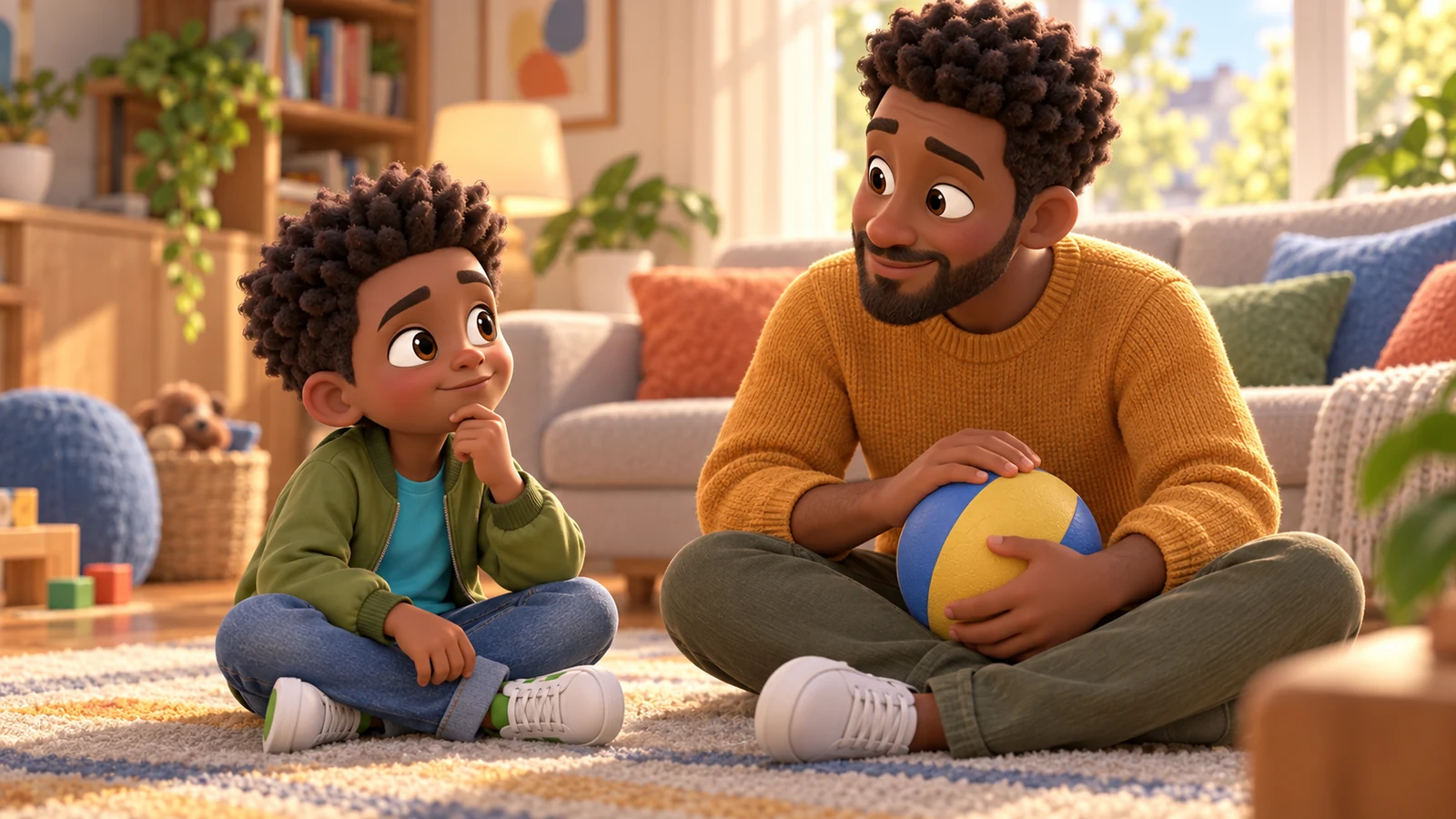
Read your child a situation, such as “A kid says you can’t play,” and let them answer; if they freeze, offer a line like “Okay, maybe next time.” Run one scenario a day for five minutes, then swap roles so they play the other child.
Key takeaways
- You don’t need a printable pack. Thirty situations, grouped by theme, are below, free.
- Read the situation in one sentence, let your child answer, then react: kindly sometimes, awkwardly other times.
- A strong answer is short, calm, kind to both people, and leaves a way out.
- Swap roles. Playing the child who says no teaches as much as answering one.
- Five minutes, one scenario, stop while it is still fun. Repetition matters more than length.
How to run a role-play in five minutes
Pick one situation below and read it out without hinting at the answer. Let your child reply as if it is happening, then answer back as the other child. The first time, be easy; the second time, be a little difficult. Say no, shrug or ignore them, because real children don’t follow scripts.
If your child freezes, offer two lines and let them choose. Then swap: you answer, they play the other child. Finish with one question, “Which line felt easiest?”, and stop. Anything short, calm and kind counts as a strong answer.
5 role-play scenarios about joining in and taking turns
1.“Kids are playing tag. You want to join.”
A strong answer watches first, then asks something specific (“Who’s it? Can I be in next round?”) instead of waiting to be noticed.
2.“A new kid is sitting alone at lunch.”
A strong answer goes over with an easy opener: “Is this seat free?” or “Want to sit with us?” Naming something to do together is a bonus.
3.“You ask to play and they say no.”
A strong answer is “Okay, maybe next time,” then walking over to something else to do without arguing or pleading.
4.“Your group is discussing a show you haven’t seen.”
A strong answer asks instead of pretending: “I haven’t seen it. Is it funny or scary?” Curiosity gets a child in faster than faking it.
5.“In a board game, someone keeps skipping your turn.”
A strong answer assumes a mistake, not cheating: “Wait, I think you skipped me.” Friendly and clear keeps the game going.
5 role-play scenarios about teasing
1.“Someone says your shoes are ugly.”
A strong answer is short and flat: “I like them.” No defending and no insult back, so there is nothing left to react to.
2.“A kid copies everything you say, to annoy you.”
A strong answer is one calm “Stop. I don’t like that,” then walking toward other people. If it continues, the next step is telling a teacher.
3.“Your friend makes a joke about you. Everyone laughs.”
A strong answer marks the line without ending the friendship: “Okay, that one wasn’t funny,” said lightly, or later in private.
4.“You get an answer wrong and the class laughs.”
A strong answer is a shrug and “Yep, that was a weird one,” then back to work. Laughing along, if it comes easily, takes the fun out of it.
5.“An older kid calls you a baby at the bus.”
A strong answer is a bored “Okay,” or nothing, then moving closer to friends or an adult. With older kids, the goal is distance, not a comeback.
5 role-play scenarios about winning and losing
1.“You lose a board game to your little brother.”
A strong answer is “Good game. Rematch?” even through gritted teeth. The disappointment can come out afterwards, in words, to you.
2.“Your team loses and a teammate blames you.”
A strong answer doesn’t argue about blame in the moment. “We all had a rough game,” then a walk to cool down.
3.“You come last in the class race.”
A strong answer congratulates the winner or says “I’ll get faster.” Praise any answer that doesn’t put your child down.
4.“The referee makes a call you think is wrong.”
A strong answer accepts the call and plays on, then asks the coach about it later if it still matters.
5.“You win, and your friend looks upset.”
A strong answer wins quietly with “Good game, that was close” and saves the celebrating for later, away from the friend.
5 role-play scenarios about honesty
1.“You broke a friend’s toy. Nobody saw.”
A strong answer owns it and offers a fix: “I broke it, I’m sorry. Can I help fix it?” The offer matters as much as the apology.
2.“A friend asks if you like their drawing. You don’t.”
A strong answer is honest and kind: finding one real thing to like, such as “I love the colors you picked.” Honest doesn’t mean saying everything.
3.“Your friend asks to copy your homework.”
A strong answer says no and offers real help: “I can’t, but I can explain question three at lunch.”
4.“You forgot your chore and a parent asks.”
A strong answer owns it straight away: “I forgot. I’ll do it now.” Most trouble comes from the cover story, not the mistake.
5.“A friend’s secret would be really funny to share.”
A strong answer keeps it: “That’s not mine to tell.” The exception is a secret about someone being hurt or unsafe, which goes to a trusted adult.
5 role-play scenarios about saying no
1.“A friend dares you to cut the lunch line.”
A strong answer is a relaxed “Nah, I’ll wait,” with no lecture. A no without a speech is easier to say and easier to accept.
2.“Your friends want you to leave someone out.”
A strong answer is “I’m not doing that. She can sit with us,” or quietly including the child anyway.
3.“Someone wants to borrow something you don’t want to lend.”
A strong answer is “Not this one, sorry,” without inventing an excuse. Children are allowed to say no to lending.
4.“A friend wants you to lie to your parents.”
A strong answer refuses without drama (“I’m not lying for you”) and tells an adult if anything unsafe is involved.
5.“Friends keep pushing after you already said no.”
A strong answer repeats the same words in the same tone, then leaves: “I said no. See you later.” No new reasons.
5 role-play scenarios about being online
1.“Someone you don’t know messages you in a game.”
A strong answer doesn’t reply to personal questions and tells a parent straight away. No child should handle a stranger online alone.
2.“A group chat starts making fun of a classmate.”
A strong answer doesn’t join in, and either posts one short line, “Not funny, leave it,” or leaves and tells an adult.
3.“A friend posts a photo of you without asking.”
A strong answer is a private message, not a public one: “Can you take that down? I don’t like it.”
4.“You’ve been left out of a new group chat.”
A strong answer doesn’t beg to be added; it checks in with one friend in person (“Did I miss something?”) and tells a parent if it hurts.
5.“Someone asks for your password to check something.”
A strong answer is “No, passwords stay private,” even with friends, and tells a parent if the person keeps asking.
What not to say (and what to say instead)
“No, that’s wrong. Say it like this.”
“That works. Want to try a shorter version?”
Correcting the answer makes role-play a test; shortening it keeps your child trying.
“What would you do if…?”
“It’s happening now: a kid says you can’t play. Go.”
Acting it out gets the words your child will actually use.
Always saying yes as the other child
Sometimes saying no, shrugging, or ignoring them
Real children don’t cooperate, and a line that only works with a kind partner isn’t ready.
“Let’s practice what happened today.”
“Want to try a made-up one first?”
A fresh, painful situation is too close; a similar made-up one is easier to rehearse.
| Instead of | Try | Why |
|---|---|---|
| “No, that’s wrong. Say it like this.” | “That works. Want to try a shorter version?” | Correcting the answer makes role-play a test; shortening it keeps your child trying. |
| “What would you do if…?” | “It’s happening now: a kid says you can’t play. Go.” | Acting it out gets the words your child will actually use. |
| Always saying yes as the other child | Sometimes saying no, shrugging, or ignoring them | Real children don’t cooperate, and a line that only works with a kind partner isn’t ready. |
| “Let’s practice what happened today.” | “Want to try a made-up one first?” | A fresh, painful situation is too close; a similar made-up one is easier to rehearse. |
What do I say when my child just says “I don’t know”?
Give them two options and let them pick: “Would you say ‘Okay, maybe next time’ or ‘Can I play after this round?’” Choosing is easier than inventing, and the chosen line is theirs.
If they still won’t answer, give a long rambling answer yourself and ask them to fix it. Improving your answer is easier than producing their own.
What if role-play at home feels awkward?
What if my child giggles or refuses?
Let them play the other child for a few rounds, and keep it silly at first with a funny voice or a puppet. The line still gets said.
What if they give perfect answers at home but freeze at school?
Nothing is at stake at home. Make your reactions less predictable and ask your child to say the line faster; speed under mild pressure is what carries over.
What if a scenario is too close to something real?
Stop and listen. If your child says it is happening to them, such as teasing that keeps going or someone online asking for photos or secrets, it is no longer a practice question. Tell them they did the right thing by telling you, and bring in the school or the platform.
When should I involve the school or a professional?
If your child is regularly left out or picked on, talk to the teacher first. If they seem very down or anxious about school, see your GP or pediatrician.
What to say at 6–8, 9–11 and 12–14
- 6–8
- Start with joining in, turns and losing. Use toys or puppets and keep answers to one line.
- “Can I play after this round?”
- 9–11
- Teasing, honesty and saying no become the main themes. Let your child write their own lines.
- “Okay, that one wasn’t funny.”
- 12–14
- Group chats and pressure lead. Ask your child to play the pushy friend; they know the script better than you.
- “Nah, I’m good.”
| Age | What changes | Line to try |
|---|---|---|
| 6–8 | Start with joining in, turns and losing. Use toys or puppets and keep answers to one line. | “Can I play after this round?” |
| 9–11 | Teasing, honesty and saying no become the main themes. Let your child write their own lines. | “Okay, that one wasn’t funny.” |
| 12–14 | Group chats and pressure lead. Ask your child to play the pushy friend; they know the script better than you. | “Nah, I’m good.” |
Key terms
- Role-play
- Acting out a situation before it happens for real, usually parent and child, swapping roles.
- Role swap
- The child plays the other person, which shows them how a reply feels from the other side.
- Exit line
- A short way to leave a situation calmly, such as “Okay, see you later.”
Questions parents ask
What are some examples of role-playing activities for kids?
Joining a game in progress, answering a tease, losing a board game, admitting a mistake, saying no to a dare and handling a stranger’s message online. Each takes five minutes: read the situation, let your child answer, react, then swap roles.
What are some good social scenarios for kids to solve?
The ones your child will meet this month. Start with the theme that matches their week, whether that is a new class or a game that ended in tears, and use the other themes to practice before they are needed.
How often should we role-play?
Little and often: one scenario, five minutes, a few times a week. Repeating the same line on different days is what makes it come out without thinking.
What do I say when my child’s answer is rude or unkind?
Don’t stop the game to lecture. Play the other child’s reaction honestly (look hurt, walk off), then ask, “How did that go?” Children usually adjust once they see the effect.
Is role-play good for shy kids?
Often, yes. Shy children tend to know what to say and struggle to start, and rehearsing the first line makes the real moment feel less new. Start with low-stakes scenarios.
Related
Sources
- Understood — 4 social situations to role-play with your grade-schooler (2026): Role-playing can help a child feel prepared and build social skills; map out the scene, give your child scripts for what to say, and practise before an upcoming event or after one that didn’t go as hoped.
- Understood — 8 social situations to role-play with your middle-schooler (2026): Act out social scenarios and how they might go, both the good and the bad; practise conversations that go easily and ones that don’t, and let tweens rehearse with a parent first.